

hortus conclusus
by Esther C.


♱⟡˙⋆This piece is a part of HAGIOGRAPHY, a digital collection of works by Guest Curator Arianna Muñoz. HAGIOGRAPHY explores the concept of the virginal, martyred girl-saint - why are we drawn to the aestheticised ‘sad girl’? Who gets the ‘privilege’ of performing this girl-saint role, and how do those outside that ideal reject or challenge it? ⋆˙⟡ ♱
⛧°. ⋆༺♱༻⋆. °⛧
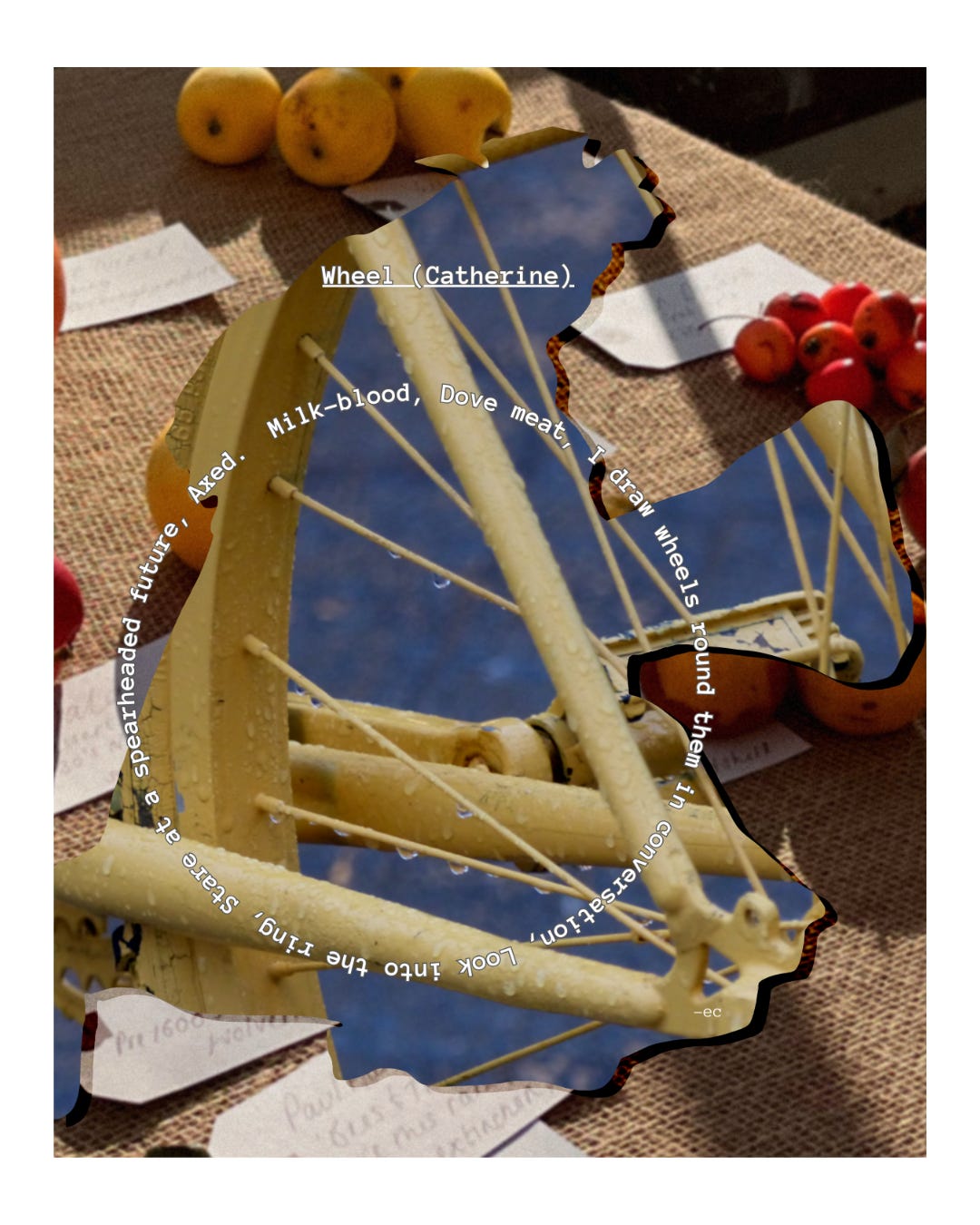
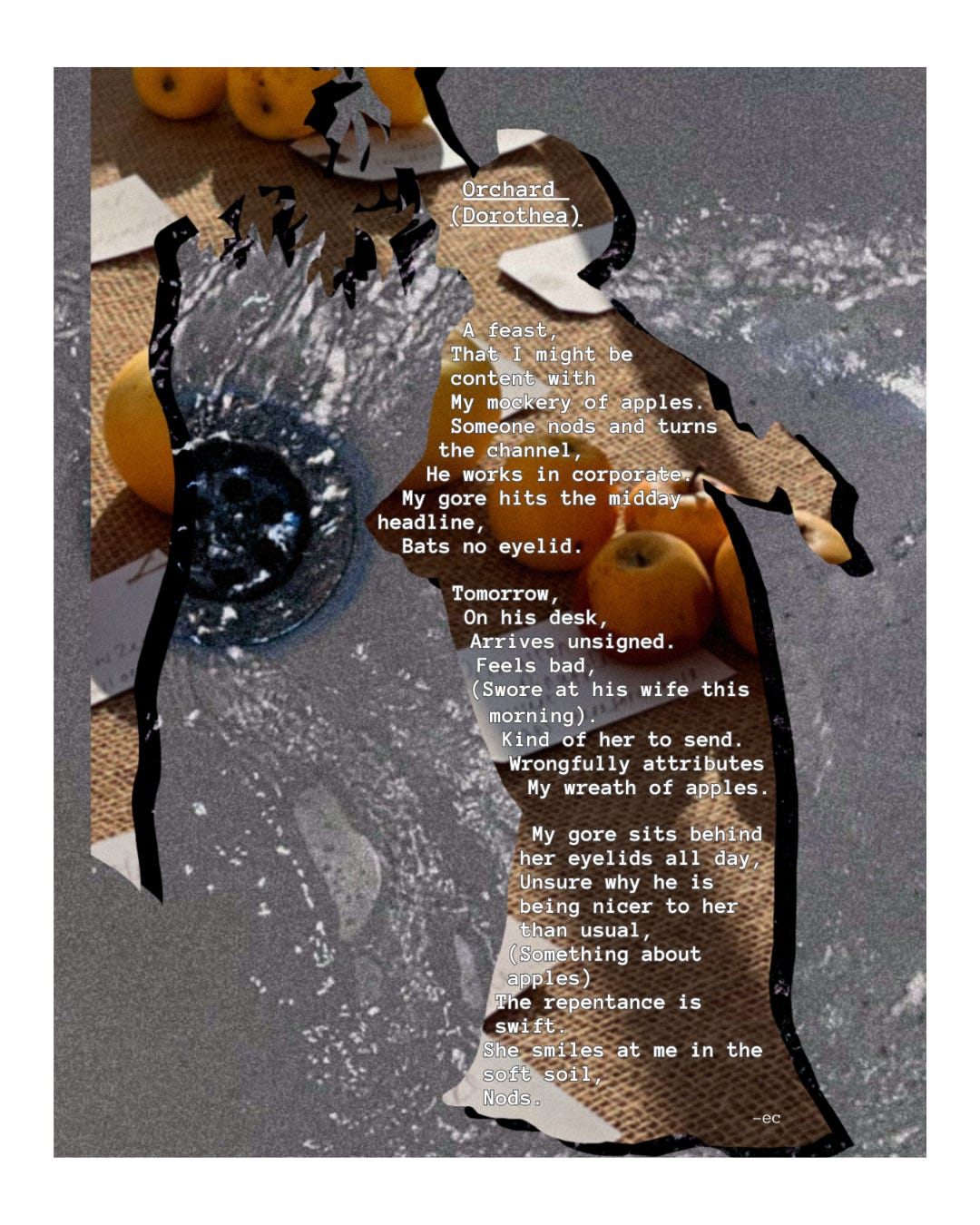
hortus conclusus blends traditional hagiographical representation with speculative futures for three female saints. Drawing silhouettes from the 15th century panel painting of a ‘hortus conclusus’ (enclosed garden) which offers the triptych its title (Paradiesgärtlein (Garden of Paradise) by an Upper Rhenish Master), the work maps the narratives of St Barbara, St Catherine, and St Dorothea.
To redeem them anachronistically from predetermined tragedy, this piece considers the saints as an allegory for reclaiming authentic personal expressions of deconstructed faith, from religious structures which traditionally glorify (particularly female) suffering.

⛧°. ⋆༺♱༻⋆. °⛧
ARTIST BIO: Esther is a dance artist and creative, predominantly working with dance, choreography, and theatre-making. Since graduating from a degree in art history, she has embraced her graphic design side, returning to her digital and traditional art roots, as well as branching out into a wider creative writing practice. Most recently assuming the role of graphic designer for Cartesian Production’s ‘Under Milk Wood’ (The O’Reilly Theatre, 2025), she is currently part of Siobhan Davies 2025-6 NEXT Choreography Cohort, as well as devising and showcasing work as part of HotCat Collective (a dance-theatre company she co-founded in 2023). Esther shares her creative work under the Instagram handle @esthersdancejournal. | A guest post by
|
Really powerful visual reframing of female sanctity. The choice to pull from the hortus conclusus iconography and then push it forward into speculative futures creates this interesting temporal tension. I appreciate how the allegory works on two levels: the garden as enclosed space mirroring how these narratives have been contained, and then the speculative element offering escape routes. The way hagiography has traditionally glamorized femaile suffering while pretending to honor it is such a tricky dynamic, and reclaiming thatsymbolic language feels more productive than just discarding it.